
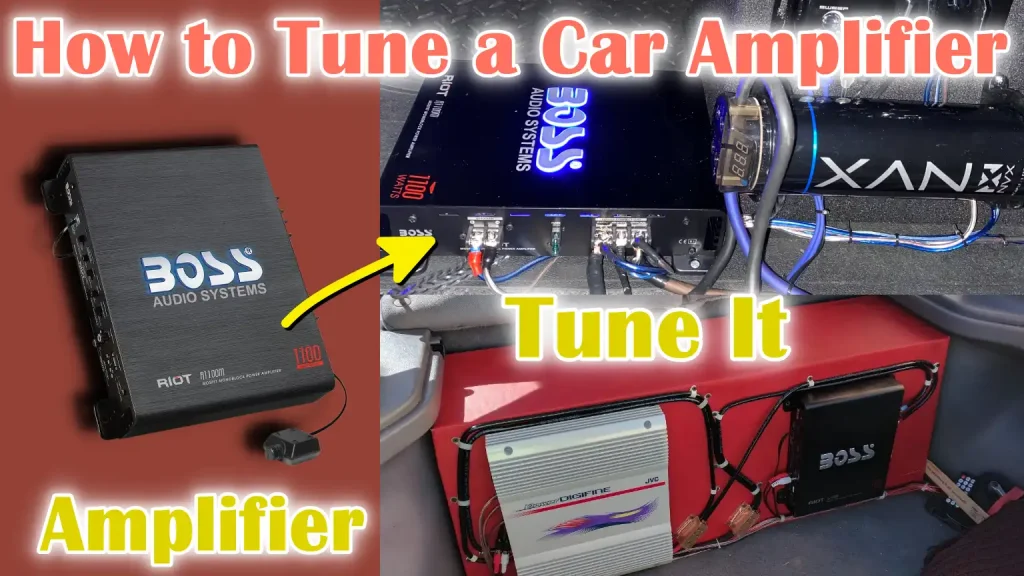
Are you ready to get the most powerful, clear sound from your car’s amplifier? Tuning your car amplifier the right way can transform your driving experience, making every beat richer and every note sharper.
But without the right know-how, you might end up with distorted sound or even damage your system. In this guide, you’ll learn simple, step-by-step tips to tune your car amplifier like a pro. By the end, you’ll know exactly how to adjust settings for the perfect balance of bass, treble, and volume—giving your music the boost it deserves.
Keep reading, and let’s unlock the true potential of your car’s sound system!

Credit: www.reddit.com
Choosing The Right Amplifier
Choosing the right amplifier is key to getting clear and powerful sound from your car audio system. The amplifier must work well with your speakers and meet your listening needs. Picking an amplifier that fits your setup helps avoid damage and makes your music sound great. Understanding some basic concepts helps you make the best choice for your car.
Matching Amplifier To Speaker Specs
Speakers have power and impedance limits. The amplifier must match these to avoid damage. Check the speaker’s RMS power rating and impedance (ohms). Choose an amplifier that delivers power within the speaker’s RMS range. Matching impedance ensures the amplifier runs smoothly without overheating.
- Use a 4-ohm amplifier for 4-ohm speakers.
- Match power ratings to avoid underpowering or overpowering.
- Consider the total number of speakers and wiring setup.
Class Types And Their Impact
Amplifiers come in different classes: A, B, AB, and D. Each class affects sound quality and power efficiency. Class A amps give clear sound but use more power. Class AB amps balance sound quality and efficiency. Class D amps are very efficient and good for bass but may have less sound clarity. Choose a class based on your sound and power needs.
Power Ratings Explained
Amplifier power ratings show how much power it can deliver. RMS (Root Mean Square) power is the continuous power output. Peak power is the maximum short burst the amp can handle. Use the RMS rating to match with your speakers. Higher RMS power means louder sound but needs proper wiring and cooling. Check both power and impedance ratings to avoid damage.
Setting Up Your Equipment
Setting up your equipment correctly is essential before you start tuning your car amplifier. It ensures that your system works safely and efficiently, giving you the best sound quality possible. Skipping this stage can lead to poor performance or even damage to your gear.
Wiring Basics And Safety
Good wiring is the backbone of a powerful car audio system. Use wires that match your amplifier’s power requirements to avoid overheating or voltage drops. Always connect the positive and negative terminals correctly to prevent short circuits.
Keep your wiring neat and secure. Loose wires can cause noise interference or accidental disconnections. I once ignored this and ended up with a buzzing sound that ruined my listening experience until I fixed the wiring.
Don’t forget to use a fuse close to the battery. It protects your system from electrical faults that could cause fires. Safety should be your top priority every time you work with car audio wiring.
Positioning The Amplifier
Where you place your amplifier affects both performance and safety. Choose a spot with good ventilation to prevent overheating. Amplifiers generate heat, and cramped spaces can cause them to shut down unexpectedly.
Many people hide their amps under seats or in trunks. While these spots save space, make sure there is enough airflow around the unit. Avoid placing it near metal parts that could cause grounding issues or vibrations that interfere with sound quality.
Think about accessibility too. You might want to tweak settings later, so don’t bury your amplifier where it’s impossible to reach without removing panels or seats.
Connecting To The Head Unit
Linking your amplifier to the head unit is more than just plugging in cables. Use high-quality RCA cables to transfer audio signals cleanly and reduce noise. Poor cables can introduce unwanted hiss or distortion.
Match the output levels between the head unit and amplifier for balanced sound. If your head unit has adjustable preamp outputs, set them to avoid clipping or distortion. I learned this the hard way when my system sounded harsh until I adjusted those levels.
Check the wiring diagram specific to your car and amplifier model. Incorrect connections here can lead to no sound or damage to components. Double-check every connection before powering up your system to avoid surprises.
Adjusting Gain And Levels
Adjusting gain and levels on your car amplifier is key to clear, powerful sound. Proper tuning stops distortion and protects your speakers. It helps your system perform at its best. This process involves setting the gain control and balancing input and output levels.
Finding The Optimal Gain Setting
Start by turning your stereo volume to about 75%. Set the gain knob on the amplifier to the lowest position. Play a song with consistent bass and vocals. Slowly increase the gain until you hear distortion. Then, reduce the gain slightly until the sound clears up. This point is the optimal gain setting for your system.
Setting gain too high causes distortion. Too low, and the sound will be weak. The goal is to match the amplifier’s input to the head unit’s output. This ensures the cleanest sound possible.
Balancing Input And Output Levels
Input and output levels must work together for balanced sound. Input level controls how much signal the amplifier receives. Output level controls the power sent to speakers or subwoofers. Adjusting these keeps sound clear and prevents damage.
- Check the input sensitivity on the amplifier manual.
- Adjust the input level to avoid clipping or distortion.
- Use a multimeter or sound meter if available for accuracy.
- Fine-tune output levels to match speaker power ratings.
Proper balance gives you clean bass and crisp highs without distortion. It keeps your car audio system safe and sounding great.

Credit: www.reddit.com
Tuning Frequency Settings
Tuning frequency settings is crucial for the best sound quality from your car amplifier. Adjusting these settings shapes the audio output to fit your car’s acoustics and your music preferences. Proper tuning balances all sound frequencies, making music clear and enjoyable.
Correct frequency tuning prevents distortion and protects your speakers. It also ensures each instrument and voice is heard clearly. Focus on crossovers, equalizer settings, and bass and treble controls for optimal results.
Using Crossovers Effectively
Crossovers split audio signals into different frequency ranges. This helps send the right sounds to the right speakers. Set the low-pass filter for subwoofers to block high frequencies. Use the high-pass filter for tweeters to block low frequencies.
Adjust crossover points based on your speaker specs. Avoid overlap to reduce distortion. Proper crossover use improves overall sound clarity and speaker performance.
Equalizer Settings For Clarity
Equalizers adjust specific frequency bands to enhance or reduce sounds. Start with all bands set to flat or zero. Boost or cut frequencies in small steps to avoid harsh sounds.
Focus on mid-range frequencies for vocal clarity. Reduce any frequencies that cause muddiness or ringing. Keep adjustments subtle to maintain natural sound.
Managing Bass And Treble
Bass and treble control the low and high ends of sound. Adjust bass to add depth without causing boominess. Too much bass can drown other sounds.
Tweak treble to brighten music and reveal details. Avoid excessive treble to prevent harshness. Balance both for a full, rich sound experience.
Testing And Fine-tuning
Testing and fine-tuning your car amplifier is where the real magic happens. It’s not just about setting knobs and hoping for the best. You need to listen carefully and make precise adjustments to get the sound just right for your car and your ears.
Using Test Tones And Music Tracks
Start by playing test tones to check each frequency range. These tones help you spot any weak or overpowering sounds quickly. Use a variety of tones, like sine waves at 50Hz, 100Hz, 1kHz, and 10kHz, to cover bass, midrange, and treble.
After test tones, switch to your favorite music tracks. Pick songs with clear vocals, deep bass, and complex instruments. This combination reveals how your amplifier handles real-world sound. Do you hear crisp highs and punchy lows without distortion?
Identifying Distortion And Fixes
Distortion often sneaks in at high volumes or with bass-heavy tracks. Listen for crackling, buzzing, or any unnatural fuzziness. If you catch distortion, first reduce the gain or volume on your amplifier.
Check your wiring too—loose or thin cables can cause signal issues. Sometimes, adjusting the bass boost or crossover settings solves distortion problems. Have you noticed how a small tweak can clear up sound instantly?
Adjusting For Different Environments
Your car’s interior changes how sound behaves. Leather seats absorb differently than fabric, and open windows alter bass response. Test your system in various conditions—windows up, windows down, and with passengers onboard.
Adjust your amplifier settings to match these environments. You might need to lower bass when driving with windows down to avoid booming. How often do you change your settings depending on where and how you drive?

Credit: www.youtube.com
Maintaining Amplifier Performance
Keeping your car amplifier in top shape is key to enjoying clear, powerful sound every time you hit the road. Maintaining amplifier performance isn’t just about tuning settings; it also means caring for the device to prevent overheating and damage. Small habits and checks can extend the life of your amplifier and keep your music sounding great.
Cooling And Ventilation Tips
Heat is the enemy of electronic components. Without proper cooling, your amplifier can overheat, causing distortion or even permanent damage.
Make sure your amplifier has enough space around it for air to flow freely. Avoid stuffing it in tight compartments or under heavy blankets of wires.
If your car runs hot or you have a powerful amp, consider installing a dedicated cooling fan. It helps maintain a steady temperature, especially during long drives or high volume sessions.
Ask yourself: Is your amplifier in a spot where heat can easily build up? If yes, try repositioning it to a cooler area.
Regular Inspection And Cleaning
Dust and grime can sneak into your amplifier’s vents and connections, reducing performance over time.
Make it a habit to visually inspect your amp every few months. Look for dust buildup, loose wires, or corrosion on terminals.
Use a soft brush or compressed air to clean dust off the surface and vents. For connectors, a small amount of electronic cleaner can improve contact quality.
I once ignored a dusty amplifier, and it started cutting out during drives. After a quick cleaning, the sound was clear again, proving how simple upkeep makes a big difference.
Frequently Asked Questions
How Do I Properly Tune A Car Amplifier?
To properly tune a car amplifier, start by setting the gain. Use a multimeter to measure voltage. Adjust the crossover settings to match your speakers. Fine-tune the bass and treble levels to your preference. Avoid distortion by ensuring the amplifier isn’t overdriven.
Regularly check and adjust for optimal performance.
What Tools Do I Need For Tuning?
For tuning a car amplifier, you’ll need a multimeter, a screwdriver, and possibly an oscilloscope. These tools help in adjusting gain, measuring voltage, and setting crossover frequencies. Having the right tools ensures precise tuning and optimal sound quality from your car’s audio system.
Why Is My Car Amplifier Not Loud Enough?
If your car amplifier isn’t loud enough, check the gain settings first. Ensure the input signal is strong and the speakers are compatible. Verify that there are no wiring issues. Incorrect crossover settings can also limit volume. Proper adjustments can enhance the sound output significantly.
How Can I Avoid Amplifier Distortion?
To avoid amplifier distortion, ensure the gain is set correctly. Use an oscilloscope for precise adjustments. Avoid overdriving the amplifier by keeping volume levels in check. Ensure that your speakers are compatible with the amplifier’s power output. Regularly check connections to maintain sound clarity.
Conclusion
Tuning your car amplifier improves sound quality and listening pleasure. Start by adjusting gain, bass, and treble carefully. Test settings at low volume first to avoid damage. Small changes make a big difference in sound clarity. Remember to keep cables and connections secure for best results.
Regular tuning keeps your system working well over time. Enjoy clearer, richer music on every drive. Simple steps lead to better sound without extra cost or effort. Your car audio will thank you for the care and attention.