
How to Test Car Amplifier With Multimeter: Easy Step-by-Step Guide
Are you having trouble with your car amplifier and don’t know where to start? Testing your amplifier with a multimeter is easier than you might think.
With just a few simple steps, you can find out if your amplifier is working properly or if it needs repair. Imagine saving time and money by diagnosing the issue yourself, without relying on expensive technicians. In this guide, you’ll learn exactly how to use your multimeter to test your car amplifier quickly and accurately.
Keep reading, and take control of your car audio system today!

Credit: www.youtube.com
Tools Needed
Testing a car amplifier with a multimeter requires a few essential tools. These tools help measure voltage, current, and resistance safely and accurately. Having the right equipment ensures clear results and protects your amplifier from damage.
Choosing The Right Multimeter
Select a multimeter that can measure DC voltage, AC voltage, and resistance. Digital multimeters are easier to read and more accurate for beginners. Look for one with a range large enough to test car amplifier voltages, usually up to 20 volts DC and 200 volts AC. Auto-ranging multimeters simplify the process by choosing the correct range automatically.
Additional Equipment
- Test Leads:Use insulated test leads with sharp tips for precise contact.
- Alligator Clips:Help secure connections during testing without hands-on holding.
- Screwdrivers:Needed to open amplifier panels or tighten connections.
- Wire Strippers:Useful if you need to expose wire ends for testing.
- Protective Gloves:Keep your hands safe from sharp edges and electrical shock.
Preparing The Amplifier
Preparing your car amplifier before testing it with a multimeter is crucial to ensure accurate readings and to protect both you and your equipment. Skipping these steps can lead to faulty results or even damage the amplifier. Taking a moment to set up properly saves time and frustration later on.
Disconnecting Power Sources
Start by turning off the car’s ignition and removing the key. This prevents any accidental power surges while you’re working.
Next, disconnect the amplifier’s power wire from the battery or fuse box. You want to eliminate all power sources to avoid short circuits.
Don’t forget to unplug the ground wire as well. This ensures the amplifier is completely isolated before you begin testing.
Accessing The Amplifier Terminals
Locate the amplifier, usually found under a seat or in the trunk. Remove any covers or panels blocking your access.
Identify the terminals clearly. You should see connections labeled for power, ground, speaker outputs, and input signals.
Use a flashlight if needed to get a clear view. Knowing exactly where to place your multimeter probes makes the testing process smoother and more accurate.
Checking Power Supply
Checking the power supply is a crucial step in testing a car amplifier with a multimeter. Without proper power, the amplifier cannot function correctly. Ensuring the amplifier receives the right voltage and has a solid ground connection can prevent many common issues. This section explains how to verify these power supply elements easily and safely.
Testing Voltage Input
Set your multimeter to measure DC voltage. Locate the amplifier’s power wire, usually red, connected to the battery. Place the multimeter’s positive probe on this power wire. Touch the negative probe to a good ground point or the amplifier’s ground wire.
The voltage should read between 12 and 14 volts with the car on. A reading below 12 volts may indicate a weak battery or poor connection. No voltage means the power wire or fuse might be faulty. Check the fuse box and wiring for breaks or loose connections.
Inspecting Ground Connections
Ground connections complete the electrical circuit. They must be clean and tight. Set the multimeter to continuity mode or resistance mode. Place one probe on the amplifier’s ground terminal. Touch the other probe to the car’s metal frame or battery negative terminal.
A low resistance reading near zero indicates a good ground. High resistance or no continuity means a bad ground. Clean the ground point by removing rust or paint. Tighten the ground wire securely to ensure a strong connection.
Measuring Speaker Outputs
Measuring speaker outputs is a crucial part of testing your car amplifier. This process helps check if your speakers work correctly. It also detects any wiring issues or damage. Using a multimeter makes this task simple and accurate.
First, set your multimeter correctly. Then, measure the speaker resistance to understand its condition. Both steps ensure your audio system performs well.
Setting Multimeter To Ohms
Turn on your multimeter and select the ohms (Ω) setting. This mode measures electrical resistance. Resistance shows how easily current flows through the speaker.
Choose a low ohm range, usually between 2 to 20 ohms. This range fits most car speakers. Avoid higher ranges to get precise readings.
Testing Speaker Resistance
Disconnect the speaker wires from the amplifier. Touch the multimeter probes to the speaker terminals. It does not matter which probe touches which terminal.
Read the number shown on the multimeter display. A typical car speaker resistance is between 4 and 8 ohms. Values much lower or higher may indicate problems.
- If the reading is near zero, the speaker may have a short circuit.
- If the reading shows infinite or no change, the speaker might be open or damaged.
Repeat this test for each speaker to ensure all work properly. Proper resistance means your amplifier will drive the speakers safely.
Testing Signal Input
Testing the signal input of a car amplifier is important to ensure it receives the correct audio signal. A multimeter helps check if the amplifier gets the right voltage from the source. This step avoids problems like weak sound or no sound at all.
Using Multimeter In Ac Mode
Set your multimeter to the AC voltage mode. This mode measures the audio signal voltage coming into the amplifier. Connect the multimeter probes to the amplifier’s input terminals. Play music from the source device. Watch the multimeter display for voltage changes. A fluctuating reading means the signal is present. No change may indicate a problem with the input source or cables.
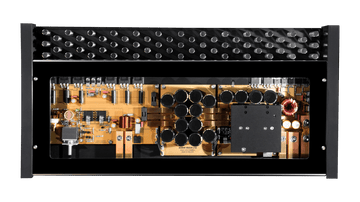
Checking Rca Input Voltage
Use the multimeter to check the RCA input voltage. Insert the red probe into the RCA signal pin. Place the black probe on the RCA ground. Play music at a moderate volume. Look for small AC voltage readings, usually below 1 volt. This shows the signal is reaching the amplifier. Zero or no reading means the RCA cables or source may be faulty. Replace or retest as needed.
Credit: audiointensity.com
Inspecting Fuse And Wiring
Inspecting the fuse and wiring is a vital part of testing a car amplifier with a multimeter. A blown fuse or damaged wiring can cause the amplifier to stop working or produce poor sound quality. Checking these components ensures the amplifier receives power and signals correctly.
Checking Fuse Continuity
Start by locating the fuse connected to the amplifier. Remove the fuse carefully from its holder. Set your multimeter to the continuity mode or the lowest resistance setting. Touch the multimeter probes to both ends of the fuse. A continuous beep or a reading close to zero means the fuse is good. No beep or a very high reading indicates a blown fuse. Replace the fuse with one that matches the exact rating specified by the amplifier manufacturer.
Examining Wiring For Damage
Inspect all wires connected to the amplifier. Look for cracks, frays, or exposed copper. Check the wiring insulation for any discoloration or melting. Use the multimeter in resistance mode to test wire continuity. Place one probe at one end of the wire and the other at the opposite end. A low resistance reading shows the wire is intact. High resistance or no reading means the wire is broken or damaged. Secure loose connections and replace damaged wires to prevent power loss or shorts.
Troubleshooting Common Issues
Troubleshooting common issues with a car amplifier helps keep your sound system running smoothly. Many problems are simple and can be fixed with a multimeter. Understanding how to check the amplifier with this tool saves time and money.
Testing electrical parts lets you find where the problem hides. You can check power flow, speaker connections, and internal components. This ensures the amplifier works as it should.
Identifying No Power Problems
Start by checking the amplifier’s fuse with a multimeter set to continuity mode. A blown fuse stops the power flow and needs replacement.
Next, measure the voltage at the amplifier’s power terminals. The reading should match the car battery voltage, around 12 volts. If no voltage appears, check the power wire and ground connection.
Inspect the remote turn-on wire. This wire signals the amplifier to turn on. Use the multimeter to test for 12 volts on this wire when the stereo is on.
- Check fuse continuity
- Measure battery voltage at power terminals
- Test remote turn-on wire voltage
- Inspect ground connection for tightness
Fixing Distorted Sound
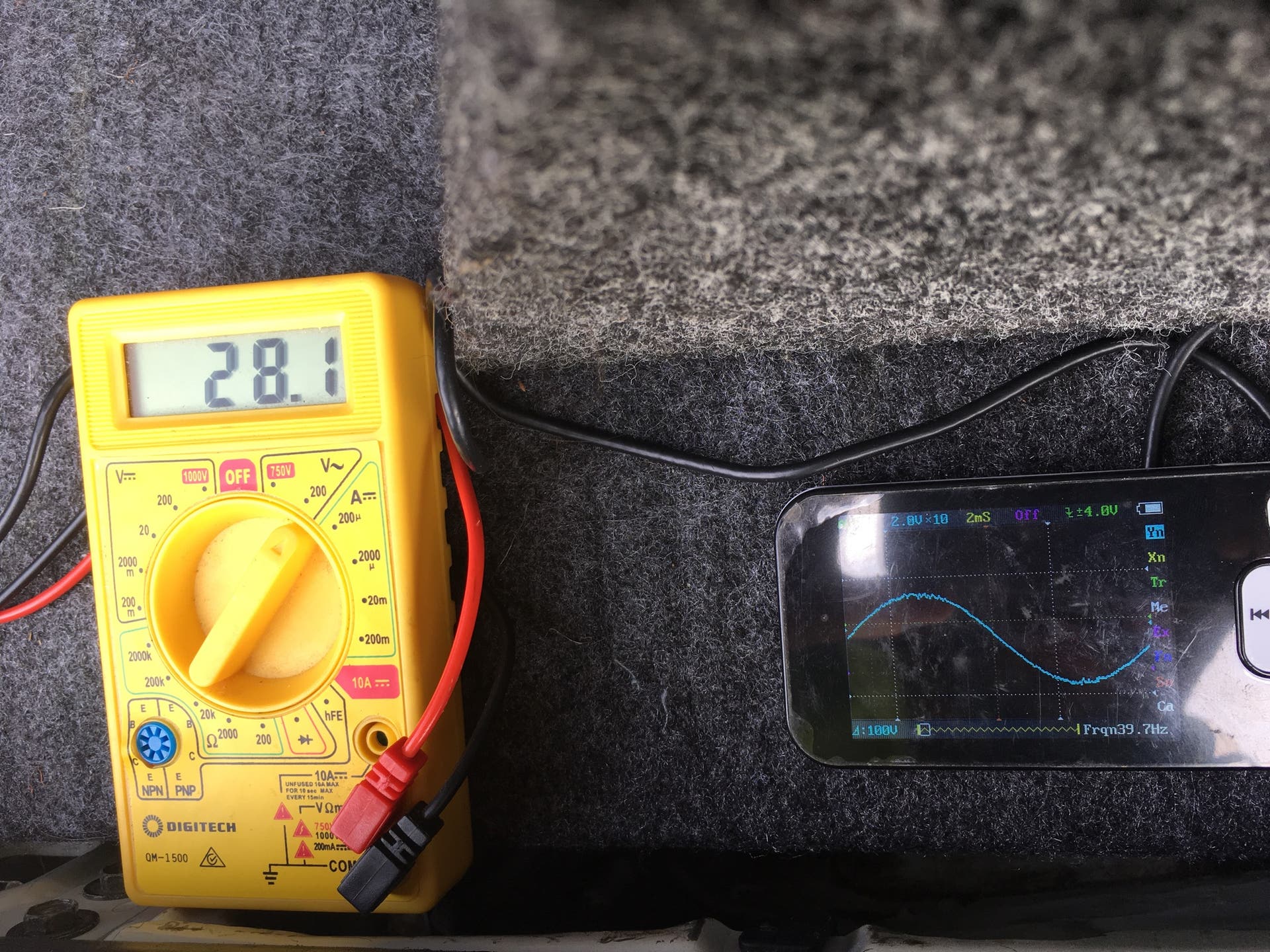
Distorted sound usually comes from bad wiring or speaker issues. Use the multimeter to test speaker resistance. A normal speaker shows 4 to 8 ohms. If the reading is very high or infinite, the speaker may be damaged.
Check the amplifier’s output terminals for proper voltage. Distortion can occur if the amplifier clips or if voltage fluctuates.
Inspect all connections for corrosion or looseness. Clean or tighten wires as needed. Faulty connections often cause poor sound quality.
- Measure speaker resistance
- Test voltage at output terminals
- Check all wiring connections
- Replace damaged speakers or wires
Credit: www.diymobileaudio.com
Frequently Asked Questions
How Do I Set Up A Multimeter For Testing?
To set up a multimeter, turn it to the appropriate setting, often DC voltage for amplifiers. Connect the red probe to the positive terminal and the black probe to the negative terminal. Ensure connections are secure for accurate readings.
What Safety Measures Should I Take?
Always disconnect the amplifier from power before testing. Use insulated gloves and ensure probes are in good condition. Avoid touching metal parts and keep your workspace dry and organized to prevent accidents.
How Do I Test An Amplifier’s Power Output?
To test power output, set the multimeter to AC voltage. Connect probes to the amplifier’s output terminals. Play a test tone through the amplifier. Read the voltage on the multimeter to assess power output.
Can A Multimeter Check Amplifier Continuity?
Yes, a multimeter can check continuity. Set it to the continuity mode, and test between two points on the circuit. A beep or low resistance reading indicates continuity, meaning the circuit is complete.
Conclusion
Testing your car amplifier with a multimeter is simple and helpful. You can find problems quickly by checking voltage and resistance. This helps keep your sound system working well. Using the right steps makes testing safe and effective. Practice these steps to feel confident and save money on repairs.
A multimeter is a useful tool for any car audio owner. Try testing your amplifier today to keep music loud and clear.