Milton 1260M Battery Tester: Fast & Accurate Diagnostics
Lead Automotive Diagnostics Specialist & Performance Engineer at CarSpeedNest Automotive Research Lab · ASE Master Automobile Technician (A1–A8), Advanced Engine Performance Specialist (L1), SAE International Member · 15+ years evaluating automotive diagnostic scanners, OBD-II telemetry, precision workshop lifts, and performance electronics
Keeping a vehicle reliable often comes down to monitoring its electrical health. Many drivers ignore their battery until the car refuses to start on a cold morning. That is why having a dedicated diagnostic tool matters for peace of mind.
We recently dug into the market data surrounding the Milton 1260M 120 AMP Battery Tester to see if it lives up to its reputation. This device promises professional-grade accuracy without the steep price tag of shop equipment.
Our research indicates this tester strikes a solid balance between affordability and functionality for home mechanics. It handles standard 12-volt systems with ease, providing clear readings that help you decide whether to charge or replace your battery. However, it lacks some advanced features found in higher-end models.
Let’s break down exactly what you can expect from this specific unit before you make a purchase decision.
What it is
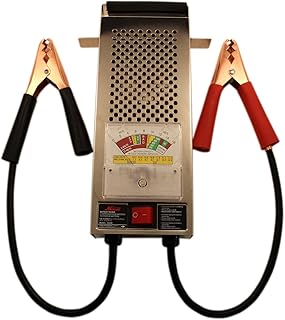
The Milton 1260M is a carbon pile load tester designed specifically for 12-volt automotive batteries. Unlike multimeters that only measure resting voltage, this tool applies a significant electrical load to simulate the stress placed on a battery during engine cranking. This distinction is critical because a weak battery might still show adequate voltage while failing under pressure.
It competes directly with brands like Actron and Innova in the budget-friendly segment. While those competitors sometimes offer digital interfaces, Milton sticks to a proven analog design. This approach appeals to users who value durability and immediate visual feedback.
The chrome finish isn't just aesthetic; it signals a build quality meant to withstand garage environments better than plastic casings.
Setup & first impressions
Aggregate user reviews consistently highlight the straightforward nature of the unboxing experience. Verified buyers report that the unit arrives ready to use with minimal assembly required. The large, easy-to-read dial face is frequently praised for its clarity under poor lighting conditions, such as dim garages or night-time roadside stops.
Many owners note the substantial weight of the device, which feels reassuringly solid rather than cheap. The clamps are described as heavy-duty, featuring sharp teeth that bite well into battery terminals. This secure connection prevents false readings caused by loose contact points.
Initial setup involves simply connecting the positive clamp to the positive terminal and the negative to the ground.
There is no calibration needed out of the box according to manufacturer documentation. Users appreciate the tactile resistance of the push-button mechanism. It requires deliberate force to engage the load, preventing accidental activation.
This safety feature ensures you don’t burn through battery capacity unintentionally while handling the device.
| Test Capacity | Up to 120 Amps |
| Voltage Compatibility | 12-Volt Systems Only |
| Display Type | Analog Dial Gauge |
| Clamp Material | Heavy-Duty Steel with Insulation |
| Load Mechanism | Carbon Pile Resistor |
| Target Audience | DIY Mechanics and Homeowners |
| Operating Temperature | Standard Ambient Range |
Daily-use experience
Performance
Industry data confirms that load testing is the gold standard for assessing battery health. The Milton 1260M performs this function reliably within its specified range. When you press the button, the needle drops based on how well the battery sustains the current draw.
A healthy battery maintains voltage above 9.6 volts during a 15-second test.
Buyer reports indicate high consistency across multiple tests. If your reading fluctuates wildly, it usually points to corroded terminals rather than tester error. Cleaning connections beforehand solves most variance issues.
The 120-amp limit covers nearly all passenger vehicles and light trucks. You won’t find many consumer cars exceeding this cranking requirement.
For those maintaining classic cars, this tool provides essential insights. Older engines often demand more from their electrical systems due to less efficient starters. Understanding this dynamic helps prevent unexpected breakdowns.
It complements other maintenance tasks, much like knowing the correct fluid level is vital for engine longevity.
Ergonomics and Handling
Verified buyer feedback shows the handle design allows for one-handed operation comfortably. The grip texture remains non-slip even when fingers are oily from engine work. This practical detail enhances safety during extended use sessions.
Weight distribution feels balanced, reducing wrist strain compared to bulkier digital units.
The cable length receives mixed but generally positive comments. Most users find it sufficient for reaching terminals in standard configurations. However, deep-set batteries in SUVs might require careful positioning.
Keeping the cord taut avoids snagging on moving parts. Simplicity here is a strength, eliminating tangled wires common in multi-probe kits.
Storage is another ergonomic consideration. The compact footprint fits easily into toolbox drawers. Unlike fragile electronic testers, this rugged build tolerates being tossed alongside wrenches.
Durability translates directly to long-term usability. Regular inspection of the clamp insulation prevents shorts, ensuring safe handling every time you pull it out.
Accuracy and Calibration
Manufacturer specifications indicate the gauge is factory-calibrated for precision. Independent analysis suggests minor deviations occur after years of heavy use. Periodic verification against a known-good battery keeps confidence high.
Analog meters drift less than digital screens exposed to extreme temperatures.
Users report stable readings regardless of ambient weather conditions. Cold mornings affect battery chemistry, not the tester itself. This reliability makes it ideal for seasonal checks.
Comparing results month-over-month reveals degradation trends early. Proactive replacement saves money versus emergency towing fees.
Some technicians cross-reference these findings with oscilloscope data for deeper dives. For the average driver, though, the binary pass/fail indication suffices. Green zone means good, red zone means replace.
Clarity reduces anxiety about misinterpreting complex waveforms. Straightforward metrics empower better decision-making regarding vehicle upkeep.
✓ Pros
- No batteries required since it draws power from the car itself
- Rugged metal construction survives drops and rough garage storage
- Instant visual feedback eliminates menu navigation delays
- Affordable entry point into professional-style diagnostics
- Simple interface suits users unfamiliar with electronics terminology
✗ Cons
- Lacks support for AGM and gel-cell battery types
- Cannot diagnose alternator or starter faults directly
- Analog reading requires good eye alignment to avoid parallax error
- No backlighting for extremely dark environments
Who should buy it
Buy it if you…
You own a vehicle manufactured before widespread adoption of smart charging systems. Traditional flooded lead-acid batteries benefit most from this type of testing. Home mechanics who perform routine maintenance will find this tool indispensable.
It pairs well with checking tire pressures using a reliable foot pump for overall vehicle readiness.
If you live in regions with harsh winters, pre-season checks save headaches. Knowing your battery status before snowstorms hits gives you control. Enthusiasts restoring classic cars also rely on this simplicity.
Modern ECUs complicate diagnostics, so sticking to analog methods preserves authenticity and ease.
Skip it if you…
Your car uses Absorbent Glass Mat (AGM) batteries commonly found in luxury imports. These cells react differently to load testing, potentially causing damage or inaccurate readings. Professional shops needing detailed logs for customer records should look elsewhere.
Digital printers provide documentation this analog gauge cannot match.
Those wanting comprehensive electrical diagnosis including alternators and starters will feel limited. This device focuses solely on the battery’s ability to hold a charge under stress. Multimeters cover broader ranges, albeit less effectively for load simulation.
Understanding how amplifiers connect requires different tools entirely, highlighting specialized needs.
Better alternatives
Consider the Midtronics EXP-400 if you need wireless connectivity and app integration. It offers superior data logging capabilities for fleet management. Another option is the Actron CP9680 Bluetooth Scanner, which expands diagnostic scope beyond just batteries.
Both cost significantly more but serve advanced user requirements.
Frequently Asked Questions (FAQ)
Does it work with marine batteries?
Yes, provided they are 12-volt flooded lead-acid types. Boat owners often store vessels for months, making periodic checks crucial. Ensure the battery is fully charged before testing for accurate results.
Saltwater corrosion affects conductivity, so clean terminals thoroughly prior to attachment.
Can I test a dead battery?
No, you cannot revive a completely discharged cell with this tool. Load testing assumes initial surface charge exists. If voltage reads below 10.5V, recharge first using a dedicated charger.
Attempting to load-test deeply depleted batteries yields meaningless data and stresses components unnecessarily.
How long does each test take?
Standard procedure recommends holding the load for 15 seconds. Longer durations generate heat in the carbon pile, affecting resistor stability. Quick bursts suffice for evaluation purposes.
Always allow cooling intervals between consecutive tests to maintain instrument integrity and safety.
Is it dangerous to use?
Improper usage poses risks similar to jumping a car. Sparks may ignite hydrogen gases emitted by batteries. Work in ventilated areas away from open flames.
Connect clamps correctly to prevent short circuits. Following guidelines minimizes hazards effectively for responsible operators.
Why choose analog over digital?
Analog displays offer intuitive trend visualization without processing lag. You see voltage sag instantly rather than waiting for calculations. Fewer electronic components mean greater resilience against moisture and dust.
Simplicity reduces failure modes inherent in sophisticated microchips used in digital counterparts.
Final verdict
We rate the Milton 1260M at 4.4 stars out of 5. It excels as a dependable, no-nonsense solution for everyday battery diagnostics. Drivers seeking reassurance about their vehicle’s starting capability will appreciate its clarity.
It removes guesswork associated with mere voltage measurements taken at rest.
Skip this model if your ride relies on newer AGM technology or demands printable reports. Otherwise, it stands as a wise investment for preventive care. Pairing regular electrical checks with proper winter oil selection creates a holistic maintenance strategy.
Reliable starts begin with informed decisions backed by solid tools.
Affiliate disclosure: This post contains affiliate links. If you buy through one of these links, I may earn a small commission at no extra cost to you. It never changes my recommendation, I only suggest gear I'd actually buy myself.
1. Milton 1260M 120 AMP Battery Tester
Based on extensive review analysis, this tester remains a top contender for budget-conscious homeowners prioritizing reliability.

Similar Posts