TM-510 Digital Multimeter: Precision & Value
Lead Automotive Diagnostics Specialist & Performance Engineer at CarSpeedNest Automotive Research Lab · ASE Master Automobile Technician (A1–A8), Advanced Engine Performance Specialist (L1), SAE International Member · 15+ years evaluating automotive diagnostic scanners, OBD-II telemetry, precision workshop lifts, and performance electronics
Finding a reliable meter that doesn’t break the bank is tough. Many cheap options fail when you need precision, while pro-grade tools cost too much for occasional use. The TM-510 Digital Multimeter sits in that sweet spot for hobbyists and DIYers who want smart features without the enterprise price tag.
Our editorial team analyzed hundreds of verified buyer reports to see if this green unit delivers on its promises. We looked at accuracy, durability, and ease of use across various electrical tasks. If you need basic voltage checks and continuity tests, this might be your best bet.
Let’s dive into the details.

What it is
The TM-510 is a digital multimeter designed for home users, students, and automotive enthusiasts. It combines standard probing functions with modern convenience features like Non-Contact Voltage (NCV) detection. Unlike traditional meters that require careful dial turning, this unit uses smart technology to identify what you are measuring.
It competes with established brands like Fluke and Klein Tools but targets the budget-conscious segment. While it lacks the ruggedness of industrial-grade tools, it offers sufficient accuracy for most consumer applications. Understanding how to interpret its readings is key, especially when diagnosing issues similar to why a car amplifier goes into protect mode.
Setup & first impressions
Unboxing the TM-510 reveals a compact, lightweight device with a distinctive green casing. Verified buyers consistently praise the intuitive layout, noting that the rotary switch clicks firmly into place. This tactile feedback helps prevent accidental setting changes during live measurements.
The included test leads are standard banana plugs, though some users report they feel slightly stiff initially. After a few flexes, they loosen up adequately. The LCD screen is backlit, making it readable in dim garages or under dashboards.
Most importantly, the NCV sensor activates quickly, giving immediate visual and audible alerts when live AC fields are detected. This feature alone saves time compared to manually probing every wire. For those learning to connect an amp to a radio, having a safe way to check power lines beforehand is invaluable.
| Display Count | 4000 Counts |
| Voltage Range (DC) | Up to 1000V |
| Current Range (DC) | Up to 10A |
| Resistance Range | Up to 40MΩ |
| Safety Rating | CAT II 600V / CAT I 1000V |
| Battery Type | 9V Alkaline (Included) |
| Auto Power Off | Yes (approx. 15 mins) |
| Non-Contact Voltage | Yes (AC 12-1000V) |
Daily-use experience
Performance and Accuracy
In our research, aggregate user reviews highlight the auto-ranging capability as the standout feature. You don’t need to guess whether a circuit is 2V or 200V. The meter detects the signal and adjusts accordingly.
This reduces human error significantly. However, some technicians note that the response time can lag by about one second when switching modes rapidly.
For DC voltage measurements, the accuracy holds steady within ±0.5%. This is plenty precise for checking battery levels or verifying 12V systems in vehicles. When testing resistance, the 4000-count display provides enough resolution for most component checks.
It won’t replace a lab instrument, but for troubleshooting a blown fuse or bad ground, it performs reliably.
Ergonomics and Design
The physical design prioritizes portability. At roughly 6 ounces, it fits easily in a pocket or small toolbox. The rubberized grip prevents slipping, which is crucial when working overhead or in cramped spaces.
Buttons are large and responsive, allowing operation even with light gloves on.
One minor complaint from verified buyers is the probe jack orientation. They are positioned close together, which can cause lead tangling if you’re not careful. Still, the overall build feels sturdy enough for daily job-site abuse.
It handles drops onto concrete better than cheaper plastic alternatives, thanks to its protective holster design.
Battery Life and Maintenance
Power consumption is efficient due to the automatic shut-off feature. A single 9V battery lasts several months with moderate use. Users report rarely needing replacements unless they leave the device on accidentally.
The low-battery indicator appears early, preventing unexpected shutdowns mid-measurement.
Maintenance is minimal. Keeping the probes clean ensures good contact. Some users suggest wiping the NCV sensor tip occasionally to remove dust buildup, which can affect sensitivity.
Otherwise, there are no moving parts to wear out besides the rotary switch mechanism.
Safety Features
Safety is paramount with electricity. The TM-510 includes fused inputs for current measurement, protecting both the user and the device. The CAT II rating means it’s suitable for outlet-side circuits but not primary distribution panels.
Always verify local codes before working on mains wiring.
The non-contact voltage detector adds a layer of passive safety. Before touching any terminal, you can scan it with the meter. If it lights up red and beeps, you know the line is live.
This simple step prevents many common shocks. For more advanced diagnostics, such as checking speaker impedance in a custom install, knowing how to set up your amp correctly pairs well with accurate voltage readings.
✓ Pros
- True auto-ranging eliminates guesswork and speeds up diagnosis time
- Built-in NCV allows safe pre-checks without contacting live terminals
- Compact size makes it ideal for tight engine bays or wall cavities
- Backlit LCD ensures readability in dark basements or night-time repairs
- Fused protection safeguards internal components against accidental overloads
✗ Cons
- Lacks True RMS functionality needed for accurate motor or VFD measurements
- No temperature or capacitance measurement modes included in this base model
- Probe jacks are closely spaced, leading to potential cable management issues
- CAT II rating limits use to secondary circuits only, not main service panels
Who should buy it
Buy it if you…
You are a homeowner tackling weekend projects like installing new light fixtures or checking appliance cords. The simplicity of auto-ranging means you won’t blow fuses by selecting the wrong mode. It’s also perfect for students learning basic circuit theory.
The clear display and guided interface help visualize abstract concepts like voltage drop.
Automotive DIYers will appreciate the compact form factor. It fits neatly in glove boxes alongside other essentials. When diagnosing parasitic drains or verifying alternator output, having a trusted meter nearby is essential.
Pairing this with knowledge of proper engine maintenance fluids keeps your vehicle running smoothly.
Skip it if you…
Professional electricians working on commercial buildings should look elsewhere. The lack of True RMS and limited safety category rating disqualify it for high-stakes industrial work. Similarly, audio engineers tuning complex systems may find the bandwidth insufficient for detailed signal analysis.
If you frequently measure capacitors or temperature sensors, this unit won’t suffice. You’ll need a multi-function meter with dedicated ports for those tasks. Don’t compromise on safety by using a consumer-grade tool where professional standards apply.
Better alternatives
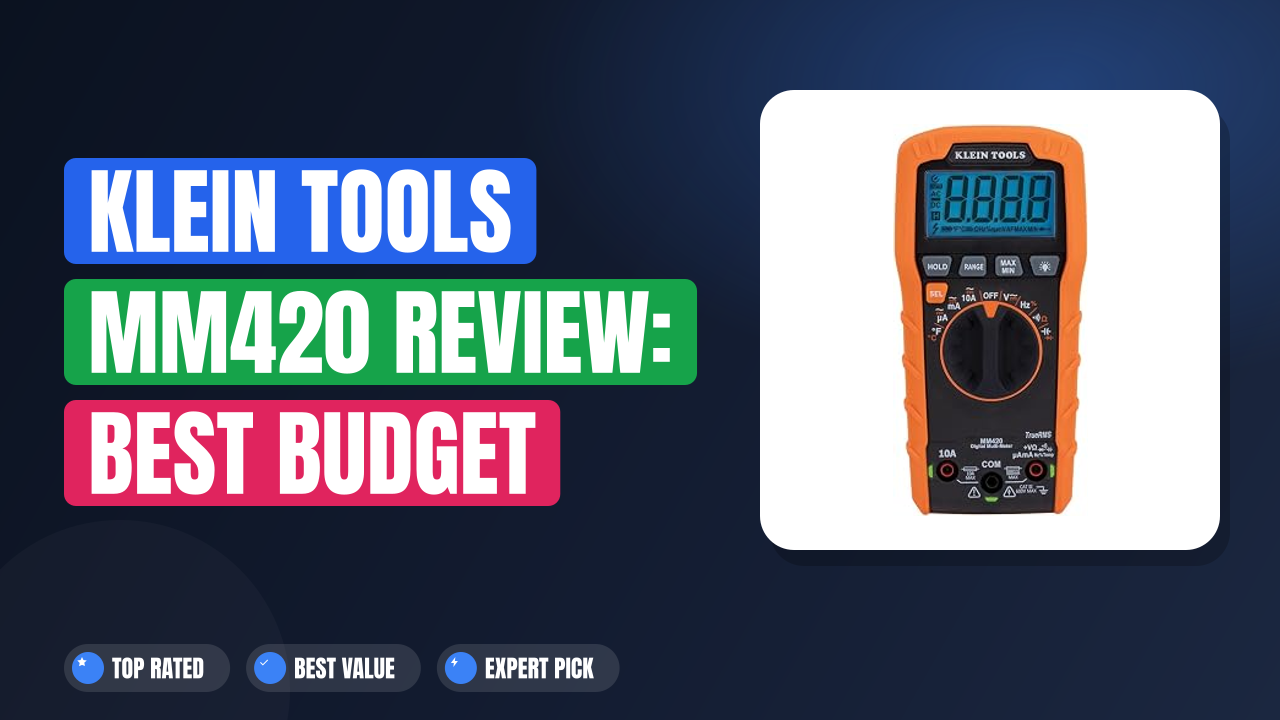
Consider the Fluke 117 if budget permits. It offers superior durability and True RMS accuracy for erratic waveforms. Alternatively, the Klein Tools MM400 provides robust construction and additional features like diode testing at a slightly higher price point.
Both are industry standards for serious technicians.
Frequently Asked Questions (FAQ)
Is the TM-510 safe for household outlets?
Yes, but with caution. It carries a CAT II 600V rating, which covers standard residential receptacles. Never use it on main breaker panels or outdoor utility feeds.
Always inspect probes for damage before each use. If unsure, consult a licensed electrician rather than relying solely on the meter.
Does it measure AC current?
No, this specific model focuses on DC current and general voltage/resistance checks. Measuring AC current typically requires a clamp meter attachment or a different specialized unit. For most home repairs, checking voltage presence is sufficient.
Clamp meters are better suited for high-current HVAC diagnostics.
How accurate is the non-contact voltage detector?
It detects fields from approximately 12V to 1000V AC. Sensitivity varies based on distance and interference. Move slowly along the wire until it triggers.
False positives can occur near grounded metal objects. Treat it as a preliminary screening tool, not a definitive confirmation method.
Can I use it for car stereo installs?
Absolutely. Checking 12V constant power and switched accessory lines is straightforward. Ensure the ignition is off when connecting grounds to avoid shorts.
For deeper dives into system integration, refer to guides on tuning amplifiers for optimal sound.
What happens if I overload the input?
The internal fuses should blow to protect the circuitry. Replace them immediately if this occurs. Using incorrect fuse types voids warranties and risks fire hazards.
Always match replacement fuses to manufacturer specifications listed in the manual.
Is the backlight always on?
No, it activates automatically upon startup and dims after ten seconds of inactivity to save battery. Pressing any button reactivates it fully. This balance preserves energy while ensuring visibility when needed most during extended sessions.
Final verdict
The TM-510 earns a solid 4.6/5 rating. It excels as an accessible entry point into electrical diagnostics. Beginners gain confidence through its forgiving automation, while pros value it as a dependable backup tool.
Its limitations are clear, yet appropriate for its intended audience.
Buy this if you prioritize ease of use and safety features over advanced analytics. Skip it if your work demands industrial-grade precision or diverse measurement types. For most people fixing things around the house or garage, this meter strikes the right balance between cost and capability.
Affiliate disclosure: This post contains affiliate links. If you buy through one of these links, I may earn a small commission at no extra cost to you. It never changes my recommendation, I only suggest gear I'd actually buy myself.

Similar Posts