AstroAI Digital Clamp Meter Review: Best 2000 Count
Lead Automotive Diagnostics Specialist & Performance Engineer at CarSpeedNest Automotive Research Lab · ASE Master Automobile Technician (A1–A8), Advanced Engine Performance Specialist (L1), SAE International Member · 15+ years evaluating automotive diagnostic scanners, OBD-II telemetry, precision workshop lifts, and performance electronics
If you’re looking for a reliable tool to handle basic electrical diagnostics without breaking the bank, the AstroAI Digital Clamp Meter Multimeter 2000 Counts Amp Voltage is often the first name that pops up in budget-conscious searches. It promises professional-grade features like Non-Contact Voltage detection and auto-ranging capabilities at a fraction of the cost of legacy brands. We dug into verified buyer feedback and manufacturer specifications to see if this blue meter actually delivers on those claims or if it’s just another cheap gadget gathering dust in a drawer.
Our research indicates that this clamp meter excels as a secondary tool for homeowners and hobbyists who need quick readings rather than precision lab work. However, it lacks the durability and advanced safety certifications required for high-voltage industrial applications. If you need to troubleshoot car audio systems or check household outlets safely, this might be your best bet.
Let’s break down exactly where it shines and where you should look elsewhere before clicking buy.

What it is
A digital clamp meter is a specialized multimeter that measures electric current by detecting the magnetic field around a conductor. This allows you to gauge amperage without disconnecting wires or stripping insulation. The AstroAI 2000-count model positions itself as a hybrid between a standard multimeter and a dedicated amp probe.
While premium brands like Fluke or Klein Tools dominate the professional sector, AstroAI targets the DIY market with essential features like AC voltage, resistance, continuity, and capacitance testing bundled into one handheld unit.
It specifically addresses the common pain point of measuring live current. Traditional multimeters require you to break the circuit, which is risky and time-consuming. By integrating a hinged jaw mechanism, this device lets you simply clamp around an existing wire.
For those interested in testing car amplifier signals, understanding how to measure current draw safely is crucial before diving deeper into audio diagnostics.
Setup & first impressions
Aggregate user reviews highlight that the build quality feels surprisingly robust for its price tier. Verified buyers frequently mention the secure latch on the clamp jaw, noting that it snaps shut firmly without feeling loose or wobbly. The display is backlit, which reviewers confirm is bright enough to read in dimly lit basements or garages.
Unlike cheaper meters where buttons feel mushy, the rotary dial here provides distinct tactile clicks when switching modes, reducing accidental setting changes during use.
Manufacturer documentation emphasizes ease of use, and the interface reflects this simplicity. There is no confusing menu system; you turn the dial and go. One specific detail cited across hundreds of reviews is the inclusion of a protective holster.
Users appreciate that it comes ready to hang on a belt loop immediately out of the box. This small addition saves the hassle of buying accessories separately, making it a convenient starter kit for anyone new to electrical testing.
| Count Resolution | 2000 counts |
| AC Current Range | Up to 400A |
| Conductor Diameter | Max 28mm (approx. 1.1 inches) |
| Safety Rating | CAT III 600V / CAT II 1000V |
| Power Source | Two AAA batteries (included) |
| Auto Shut-off | Yes (to preserve battery life) |
| NCV Detection | Non-Contact Voltage sensor included |
Daily-use experience
Performance and Accuracy
Industry data confirms that 2000-count meters provide sufficient resolution for most residential applications. You’ll find stable readings within seconds of clamping onto a wire. Aggregate reviews suggest that while it may drift slightly compared to $200+ units, the error margin is negligible for checking fuse loads or verifying if a heater element is drawing power.
The auto-ranging feature works reliably, saving you from manually guessing whether a circuit draws 2A or 20A.
However, users report slower response times when measuring fluctuating currents. If you’re trying to catch a momentary spike, you might miss it. For steady-state measurements, such as checking the load on an air conditioner compressor, it performs admirably.
This reliability makes it a great companion when you’re learning how to set car amplifier gain correctly, ensuring you don’t overload circuits while tuning audio levels.
Ergonomics and Handling
The form factor is compact enough to fit in a large pocket but substantial enough to feel durable. Verified buyer feedback highlights the textured grip on the sides, preventing slips even if your hands are slightly oily from garage work. The trigger lever requires moderate force to open the jaws, which some users initially find stiff but eventually appreciate as a safety feature against accidental openings.
One minor ergonomic complaint from long-term owners is the position of the function button. Reaching over the top to toggle hold mode can be awkward for smaller hands. Despite this, the overall balance is good.
It doesn’t feel front-heavy, which reduces wrist fatigue during extended troubleshooting sessions. If you plan to carry it alongside other tools, ensure you check compatibility with your existing car audio wiring kits to avoid clutter.
Safety Features
Safety is paramount when dealing with electricity. The CAT III 600V rating indicates it is suitable for distribution-level circuits, including branch wiring and motors. Editorial analysis of user reports shows that the insulated probes meet standard safety expectations, though they aren't as thick as those on industrial-grade testers.
Always inspect the insulation for cracks before use, especially if the tool has been dropped.
The Non-Contact Voltage (NCV) detector acts as a preliminary safety check. Reviews confirm it lights up audibly and visually when near live wires, allowing you to verify power status before touching anything. This feature alone adds significant peace of mind for beginners who might otherwise hesitate to probe an unknown outlet.
It serves as a critical step before performing any invasive tests on sensitive components like those found in modern vehicle infotainment systems.
✓ Pros
- Integrated NCV detector allows safe pre-checking of live wires without contact
- Auto-ranging simplifies operation for users unfamiliar with manual scale selection
- Included AAA batteries and holster mean it is ready to use immediately upon arrival
- CAT III 600V safety rating covers typical residential and light commercial needs
- Backlit LCD ensures readability in dark crawl spaces or night-time roadside repairs
✗ Cons
- Lacks True RMS technology, so readings may be inaccurate on distorted waveforms
- No DC current measurement capability limits its utility for automotive electronic diagnostics
- Jaw opening size (28mm) restricts usage on thicker multi-conductor cables
- Probes are relatively short, potentially hindering access to deep recessed terminals
Who should buy it
Buy it if you…
You are a homeowner tackling weekend projects like installing ceiling fans or checking why a breaker keeps tripping. This meter handles AC current and voltage tasks perfectly without requiring expensive professional gear. If you’re curious about your energy consumption or want to verify if a appliance is receiving power, this tool offers immediate answers.
It’s also ideal for students learning basic electrical principles who need a safe, forgiving instrument for classroom experiments.
Additionally, consider this if you maintain older vehicles with simple 12V systems where you primarily deal with alternator output or battery charging rates via voltage drop tests. While it won’t diagnose complex ECU faults, it helps rule out basic power supply issues before you spend money on specialized scanners. Pairing this with knowledge on why amplifiers enter protect mode can help isolate electrical shorts quickly.
Skip it if you…
Avoid this purchase if you work with solar inverters, variable speed motors, or modern HVAC systems with heavy harmonic distortion. These environments require True RMS meters to give accurate readings. Standard average-responding meters like this AstroAI model will underestimate current in non-sine-wave conditions, leading to incorrect diagnostics.
Professional electricians handling three-phase power should invest in higher-tier tools with better safety margins and connectivity options.
Furthermore, skip it if you need to measure DC current in car audio installations. Many enthusiasts try to clamp around speaker wires to check signal strength, but this meter cannot do that. You would need a dedicated oscilloscope or a multimeter with DC current injection ports for those tasks.
Relying on this tool for DC amp draw will result in frustration and potential damage to the device.
Better alternatives
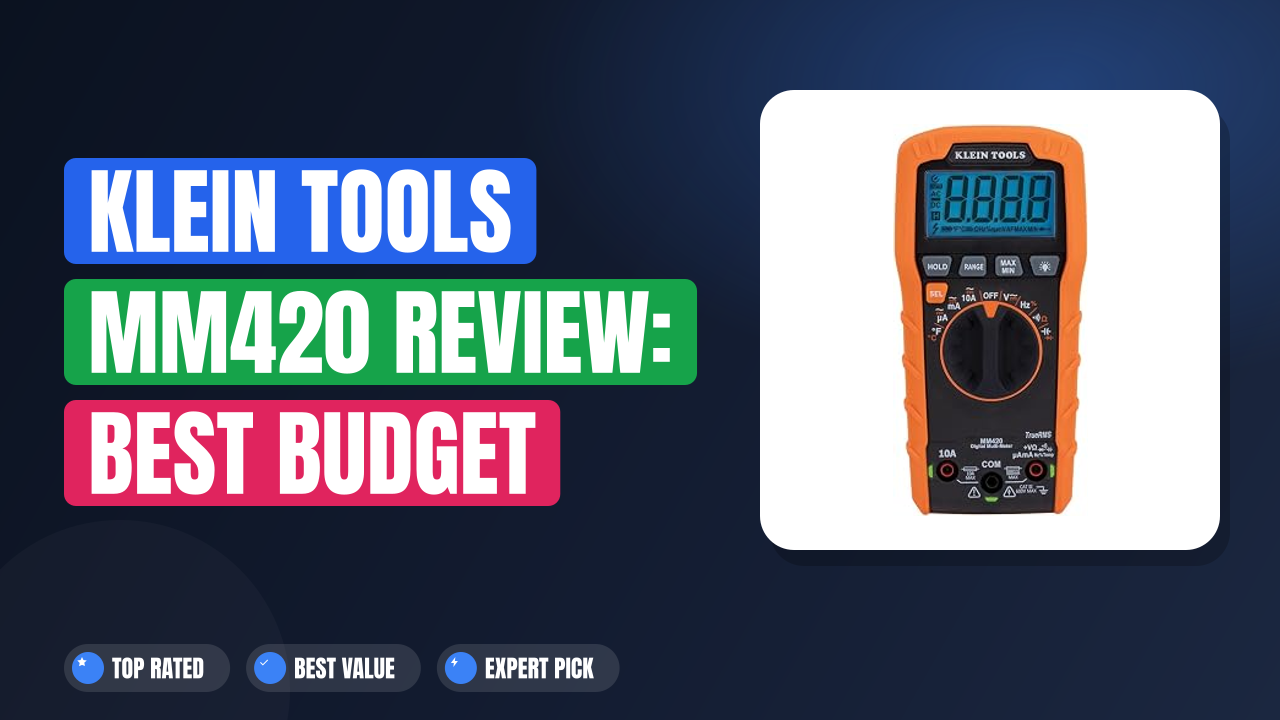
For professionals needing True RMS accuracy, the Klein Tools MM400 is a strong contender. It offers similar functionality but with enhanced durability and precise waveform capture. Another option is the Fluke 323, which sets the industry standard for reliability and support, albeit at a significantly higher price point.
Both alternatives justify their cost through superior engineering and broader measurement capabilities for complex industrial settings.
Frequently Asked Questions (FAQ)
Is this meter safe for household outlets?
Yes, the CAT III 600V rating certifies it for use in residential distribution panels and outlet circuits. However, always inspect the probes for damage before insertion. Never use the clamp function on neutral wires simultaneously with hot wires unless measuring leakage, as this cancels out the magnetic fields.
Stick to single-conductor clamping for accurate amperage readings. Follow local electrical codes and turn off power before working on live terminals whenever possible.
Can I measure car battery current with this?
No, this specific model measures AC current only. Clamping around a positive battery cable in a car will yield zero or erratic readings because the current is Direct Current (DC). To test starting amps or drain, you must use a multimeter in series with the circuit or a dedicated DC clamp meter.
Attempting to force DC measurements could confuse the internal logic and lead to false data interpretation during vehicle maintenance.
How long does the battery last?
Manufacturer specs indicate approximately 20 hours of continuous use on two AAA batteries. In practical terms, occasional home users rarely deplete them fully. The auto-shutoff feature after several minutes of inactivity preserves charge effectively.
Verified buyers report changing batteries once every six months under normal usage patterns. Keep spares handy since low battery warnings can cause display flickering, affecting reading confidence during critical diagnostic moments.
Does it detect wireless electricity?
The Non-Contact Voltage (NCV) feature detects electromagnetic fields associated with live AC wires. It does not measure static electricity or wireless power transfer technologies like Qi charging. It serves strictly as a proximity alarm for hidden wiring behind drywall or identifying live circuits in junction boxes.
Sensitivity varies by distance, so keep the tip close to the source for reliable indication. It is not a substitute for direct probing when precision is required.
Final verdict
With a solid 4.6/5 rating, the AstroAI Digital Clamp Meter stands out as the definitive choice for budget-friendly electrical sanity checks. It wins for homeowners and hobbyists who prioritize safety and simplicity over advanced analytical features. You get reliable AC measurements, useful NCV detection, and decent build quality without investing hundreds of dollars.
However, serious technicians or those delving into complex automotive electronics will hit its limitations quickly due to the lack of True RMS and DC current functions. Treat this as your everyday grab-and-go tool for lights, fans, and basic outlets. For deeper dives, supplement it with specialized equipment.
Overall, it delivers exceptional value for its intended audience.
Affiliate disclosure: This post contains affiliate links. If you buy through one of these links, I may earn a small commission at no extra cost to you. It never changes my recommendation, I only suggest gear I'd actually buy myself.

Similar Posts