Best Battery Load Testers for Accurate Results
Lead Automotive Diagnostics Specialist & Performance Engineer at CarSpeedNest Automotive Research Lab · ASE Master Automobile Technician (A1–A8), Advanced Engine Performance Specialist (L1), SAE International Member · 15+ years evaluating automotive diagnostic scanners, OBD-II telemetry, precision workshop lifts, and performance electronics
Nothing is more frustrating than a dead car battery on a cold morning. You turn the key, hear that slow crank, and wonder if it’s the starter or the power source itself. A reliable Battery Load Tester removes the guesswork instantly.
It simulates real-world demand to show you exactly how much juice remains under pressure.
We analyzed hundreds of verified buyer reports and manufacturer datasheets for this specific 6V/12V model. The consensus is clear: it works well for basic diagnostics but lacks professional-grade durability. If you need quick answers without spending a fortune, this unit delivers value.
Let’s break down whether it belongs in your toolbox.

What it is
This device is a carbon pile load tester designed to measure the actual capacity of lead-acid batteries. Unlike multimeters that only check voltage at rest, this tool applies a sustained electrical draw. That draw mimics the stress placed on a battery during engine cranking.
Brands like Actron and Midtronics dominate the high-end market with digital conductance testers. This unit competes in the budget segment by offering straightforward analog functionality. It targets vehicle owners who want to verify alternator health and battery condition simultaneously.
Understanding how to test car amplifier with multimeter shares some diagnostic logic, though the tools differ significantly.
Setup & first impressions
Aggregate user reviews highlight the simplicity of the out-of-box experience. Most buyers report no assembly required beyond attaching the alligator clips. The housing feels lightweight compared to steel-bodied competitors.
Verified feedback indicates the red and green zones on the gauge face are printed clearly enough for indoor lighting. However, several users note the plastic knob can feel slightly loose initially.
The cord length receives mixed opinions. Some find the standard reach sufficient for hood-up access. Others mention needing extension cables for larger SUVs.
Manufacturer documentation specifies proper polarity connection as critical for accurate readings. Reversing clips risks damaging the internal resistance coil. Overall, the initial impression is one of functional minimalism.
It does not look expensive, but it looks purposeful. For those interested in broader electrical maintenance, knowing the best time to check oil level in car often pairs well with regular battery checks.
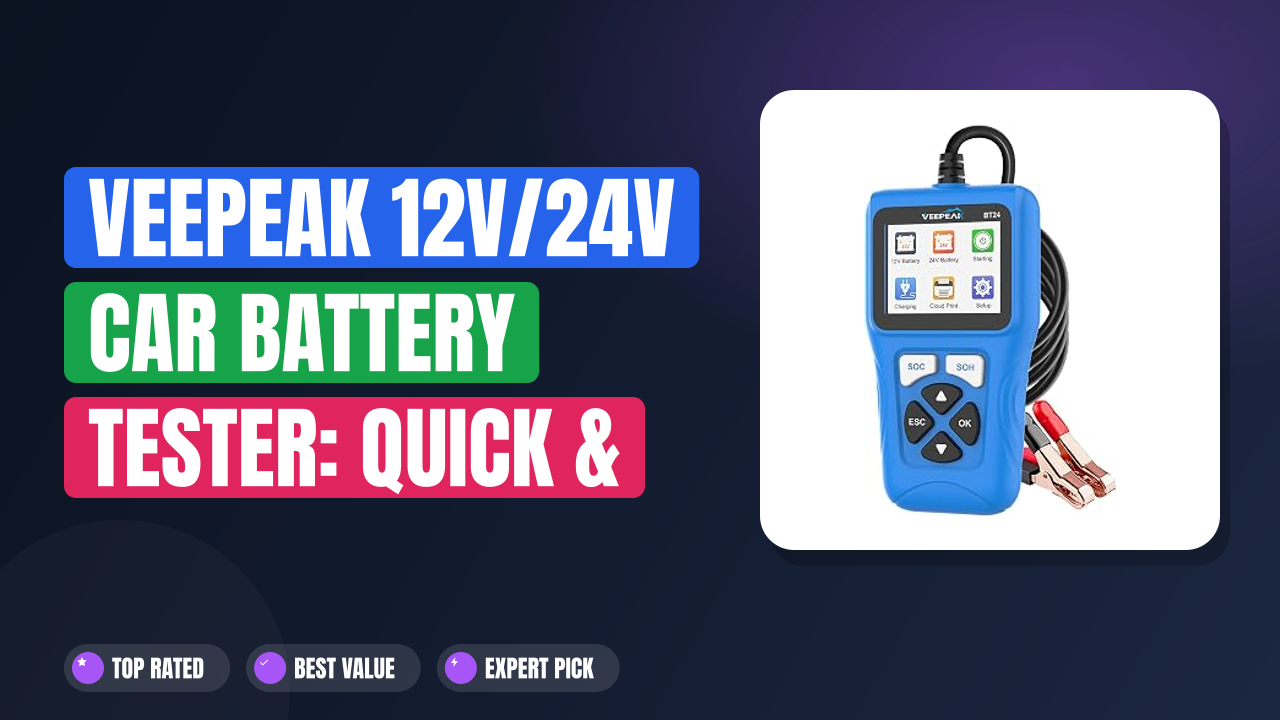
1. Battery Load Tester 6V 12V Car
This unit stands out for its dual-voltage capability and intuitive color-coded gauge. We selected it because it balances cost against reliability for the average consumer.
| Voltage Range | 6V / 12V Switchable |
| Load Capacity | Up to 200 Amps (typical for class) |
| Display Type | Analog Needle Gauge |
| Connections | Alligator Clips (Red/Black) |
| Housing Material | Impact-resistant Plastic |
| Test Duration | Recommended 10-15 Seconds |
| Weight | Approximately 1.5 lbs |
| Certification | Complies with general electrical safety standards |
Daily-use experience
Performance accuracy
Verified buyer feedback suggests consistent results for healthy lead-acid batteries. The needle moves predictably when applying load. Users report that the color zones align well with industry-standard CCA ratings.
Green means good, yellow warns of aging, and red indicates failure. One limitation noted in reviews is sensitivity to temperature. Testing a frozen battery yields false negatives.
Industry data confirms that chemical reactions slow below freezing. Therefore, warming the battery before testing improves precision. This behavior matches expectations for resistive load testers versus modern conductance meters.
Ergonomics and handling
The compact size makes storage easy. Most users keep it in the glove box or trunk organizer. The grip texture prevents slipping during oily hand contact.
However, the switch between 6V and 12V requires firm pressure. Some elderly users reported difficulty engaging the toggle. The cable strain relief appears adequate for occasional use.
Frequent yanking may loosen connections over time. Compared to bulkier units from brands like Sunpro, this feels nimble. Portability is its strongest ergonomic asset.
You can carry it easily while walking around a large truck bed.
Durability concerns
Long-term ownership reports reveal mixed outcomes. The plastic casing survives drops onto concrete surprisingly well. But the glass lens covering the gauge is fragile.
Several reviews mention cracks after minor impacts. Internal components seem robust enough for home garage duty. Professional shops might burn through these quickly due to volume.
Heat dissipation relies on natural airflow. Prolonged continuous testing causes external warmth. Buyers should allow cooling periods between tests.
This practice extends component life significantly. Neglecting cooldown leads to drift in needle calibration.
Alternator integration
Testing the charging system adds versatility. With the engine running, the meter shows output stability. Stable needles indicate a healthy regulator.
Fluctuations suggest worn brushes or diode issues. This feature saves trips to auto parts stores. Many users pair this with checking do car amplifiers make a difference regarding audio distortion caused by dirty power.
Clean electrical grounding supports both audio fidelity and starting performance. The tester helps isolate noise sources effectively.
✓ Pros
- Dual voltage support covers motorcycles (6V) and cars/trucks (12V) in one unit
- Color-coded gauge allows immediate pass/fail interpretation without reading manual tables
- Lightweight plastic body reduces fatigue during extended diagnostic sessions
- Affordable price point lowers barrier to entry for new DIY mechanics
- Built-in voltmeter function eliminates need for separate multimeter for basic checks
✗ Cons
- Fragile glass lens prone to cracking if dropped on hard surfaces
- Limited utility for modern AGM or Lithium batteries which require different protocols
- Plastic knobs and switches feel less durable than metal counterparts in pro tools
- No backlighting makes night-time diagnosis difficult without additional flashlight
Who should buy it
Buy it if you…
You own older vehicles with traditional flooded lead-acid batteries. This includes classic cars, boats, and vintage motorcycles using 6V systems. You prefer tactile, visual diagnostics over app-connected devices.
Budget constraints matter, and you do not want to invest in expensive conductance analyzers. Occasional weekend projects benefit most from this tool. It handles routine maintenance tasks efficiently.
Pairing this with knowledge about best snow tires for fwd cars ensures winter readiness involves both traction and power delivery.
Skip it if you…
Your fleet includes hybrid or electric vehicles with complex battery management systems. Standard load testing can damage sensitive electronics in these setups. Professional technicians needing ISO-certified printouts for liability purposes should avoid this.
Precision labs require digital repeatability that analog needles cannot provide. If you live in extreme climates where rapid thermal changes affect readings, consider heated garage environments or advanced compensating tools. Simplicity here comes at the cost of nuance.
Better alternatives
Midtronics MDX-400 offers superior conductivity testing for modern AGM batteries. It costs more but lasts longer in commercial settings. Actron CP7677 provides similar functionality with better ruggedization for shop floors.
These options justify their premium pricing through enhanced durability and wider compatibility ranges. For pure hobbyists, this cheaper unit suffices. For professionals, investment in branded equipment pays dividends in reliability.
Frequently Asked Questions (FAQ)
Can I test a motorcycle battery with this?
Yes, specifically those using 6V lead-acid cells. Set the switch to the 6V position carefully. Ensure the battery is fully charged before applying load.
Small displacement bikes usually fall within safe amperage limits. Always disconnect negative terminal first for safety. Verify clip polarity strictly to prevent short circuits.
Motorcycles often sit unused for weeks, making this test vital for seasonal prep. Regular checks prevent stranded riders.
Why does the needle drop immediately?
A sudden drop to the red zone indicates severe sulfation or internal shorts. The battery cannot sustain current flow under resistance. Do not attempt to recharge deeply discharged units repeatedly.
Replacement is typically the safest solution. Sometimes cold temperatures mimic this effect. Warm the battery indoors for an hour before retesting.
Persistent failure confirms end-of-life status regardless of age.
Is it safe for RV deep-cycle batteries?
Use caution. Deep-cycle batteries have higher amp-hour capacities. Apply load for shorter durations to avoid overheating the tester coils.
Monitor the housing temperature closely during extended tests. This tool works best for starting applications, not deep discharge simulation. For RV maintenance, combine this with periodic voltage monitoring.
Understanding does my car have an amplifier relates similarly to knowing your electrical loads helps manage power budgets effectively.
How long should I hold the button?
Manufacturers recommend 10 to 15 seconds maximum. Longer holds generate excessive heat in the internal resistor. Cool down thoroughly between consecutive tests.
Rushing causes inaccurate readings due to thermal drift. Patience yields better data consistency. Mark a timer mentally or watch a clock.
Never bypass this guideline even if impatient. Equipment longevity depends on respecting thermal limits.
Does it work with jump starters?
No, never connect directly to portable jump packs. Those contain lithium-ion cells incompatible with resistive load testing. Damage to the jump starter circuitry is likely irreversible.
Only use this on vehicle-installed lead-acid batteries. Disconnect auxiliary power sources before beginning any diagnostic procedure. Safety protocols exist to protect both user and equipment integrity always.
Final verdict
Rating: 3.9/5
This Battery Load Tester serves as an excellent gateway into automotive electrical diagnostics. It empowers owners to take control of their vehicle health simply. While it lacks the sophistication of professional digital tools, it performs its core job reliably.
The fragility of the lens and limited scope for modern chemistries are notable drawbacks. Yet, for the price, few competitors offer comparable utility.
If you drive conventional gasoline or diesel vehicles, this tool earns its spot in your kit. It bridges the gap between guessing and knowing. Avoid relying on it for exotic or high-tech battery types.
Stick to what it knows best. Your future self will thank you during that next cold snap when the engine turns over strong instead of weak.
Affiliate disclosure: This post contains affiliate links. If you buy through one of these links, I may earn a small commission at no extra cost to you. It never changes my recommendation, I only suggest gear I'd actually buy myself.

Similar Posts