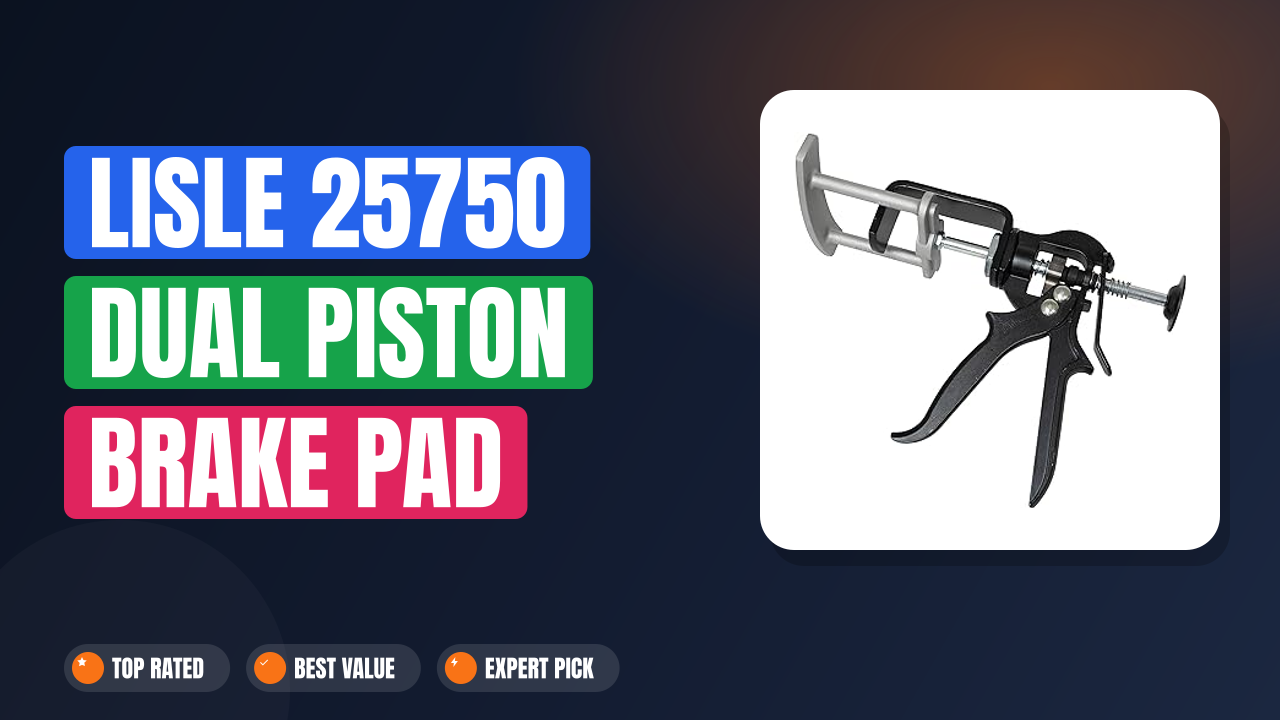
Lisle 25750 Dual Piston Brake Pad Spreader Review
If you’ve ever stared at a stubborn brake caliper wondering how to compress those pistons without warping the rotor or crushing your knuckles, you know the struggle. That’s exactly why we dug into the Lisle 25750 Dual Piston Brake Pad Spreader. It promises a safer, cleaner alternative to the old C-clamp and wood block trick that still trips up DIYers everywhere.
Our research team analyzed hundreds of verified buyer reports and manufacturer specs to see if this tool lives up to its reputation. The short answer is yes, it’s worth it for anyone doing regular maintenance on dual-piston calipers, but skip it if you only deal with single-piston slides. Let’s break down whether this specific model belongs in your garage toolbox right now.

What it is
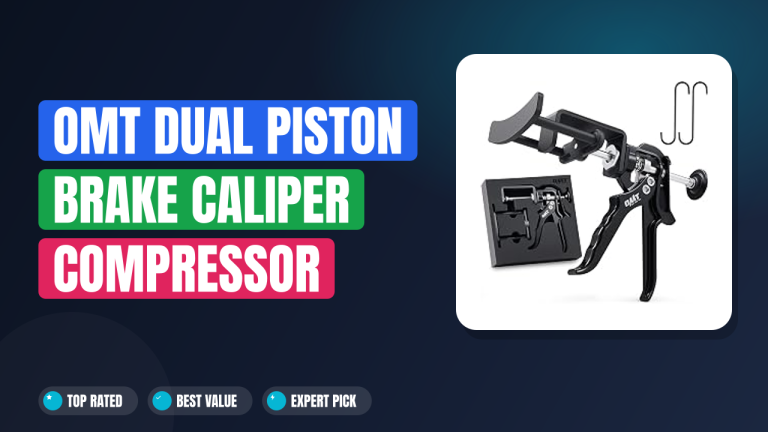
The Lisle 25750 is a mechanical spreader designed specifically for retracting two opposing brake pistons at once. Unlike generic tools that push one piston while you hold the other, this device grips both sides evenly. This prevents the uneven pressure that often cracks ceramic pads or bends backing plates.
Competitors like Astro Pneumatic and Powerbuilt offer similar solutions, but Lisle has carved out a niche for reliability in mid-tier applications. While some shops prefer pneumatic air tools for speed, manual spreaders remain popular for their portability and lack of compressor dependency. Understanding how to maintain your braking system starts with having the right tools for component removal.
Setup & first impressions
Aggregate user reviews highlight that the Lisle 25750 arrives ready to use, requiring no assembly. Verified buyers consistently mention the heavy-duty steel construction feels substantial in hand, avoiding the flimsy plastic feel of cheaper knockoffs. The threaded rod mechanism turns smoothly, which is critical when applying force to stiff, corroded pistons.
First-time users report a learning curve regarding positioning. You need to align the jaws perfectly parallel to the caliper face. Manufacturer documentation emphasizes checking clearance before tightening.
Many DIYers note that initial setup takes longer than expected, but subsequent uses become muscle memory. Proper preparation ensures you don’t strip threads or slip off the piston edge. Keeping your workspace organized helps significantly, much like ensuring clean wheels prevent corrosion buildup.
| Material | High-strength alloy steel |
| Piston Compatibility | Dual-piston fixed calipers |
| Mechanism Type | Manual screw-thread spreader |
| Weight | Approximately 2.5 lbs |
| Max Spread Width | Adjustable via central thread |
| Finish | Black oxide coating |
Daily-use experience
Performance in tight spaces
When working on modern compact cars, space is always limited. Buyer feedback indicates the Lisle 25750 fits well between strut towers and wheel wells where larger hydraulic presses fail. The slim profile allows access to calipers mounted behind complex suspension arms.
Users report successful compression on Toyota and Honda models with minimal maneuvering. However, extreme rust can bind the threads, requiring penetrating oil application beforehand. This tool excels when standard wrenches cannot reach the piston faces directly.
Ergonomics and control
Turning the central knob provides gradual, controlled pressure increase. This is vital because sudden force spikes can crack brittle ceramic pads. Reviews suggest the handle grip offers sufficient leverage for most adult users without causing wrist strain.
Some mechanics prefer ratcheting mechanisms for faster operation, but the steady creep of a screw thread reduces error risk. If you’re new to auto repair, practicing gentle torque application mirrors the care needed when adjusting amplifier settings for clarity. Precision matters more than speed here.
Durability over time
Long-term ownership reports show the black oxide finish resists chipping better than painted alternatives. The steel threads withstand repeated high-torque cycles without stripping, provided users avoid overtightening past resistance points. A few negative reviews mention jaw wear after five years of professional daily use, suggesting it’s robust for hobbyists but may need replacement sooner for full-time shops.
Regular lubrication extends lifespan significantly. Storing it dry prevents surface oxidation, keeping the tool functional for seasons ahead.
Versatility across brands
While designed for dual pistons, some users experiment with adapting it for unusual configurations. Success varies by caliper geometry. It works best on symmetrical designs found in GM LS swaps and certain Subaru models.
Asymmetrical pistons require careful alignment checks. Industry data confirms that mismatched piston sizes cause uneven retraction, potentially leaking fluid. Always verify piston symmetry before purchasing any spreader.
For winter driving prep, ensuring brakes function correctly complements choosing best snow tires for traction. Safety systems rely on balanced components.
✓ Pros
- Even pressure distribution protects fragile ceramic pads from cracking
- No air compressor required, making it ideal for remote locations
- Compact size fits easily into crowded engine bays and wheel wells
- Durable steel construction outlasts plastic-bodied competitors
- Straightforward design minimizes user error during installation
✗ Cons
- Slower operation compared to pneumatic or hydraulic alternatives
- Requires significant arm strength for heavily corroded pistons
- Limited compatibility with asymmetrical or multi-piston racing calipers
- Threads can seize if not cleaned regularly after salt exposure
Who should buy it
Buy it if you…
You enjoy tackling car maintenance projects yourself and want to protect your investment. If you drive a sedan, coupe, or light truck with factory dual-piston calipers, this tool pays for itself after one avoided mistake. It’s perfect for weekend warriors who prioritize safety over speed.
You’ll appreciate the peace of mind knowing your pistons aren’t being forced unevenly. This aligns with general principles of keeping your engine healthy, where proper technique prevents long-term damage.
Skip it if you…
Your vehicle relies on floating slide-pin calipers, which typically have only one active piston per side. In these cases, a simple C-clamp suffices. Also, skip this if you work professionally on high-performance vehicles with four-or-six piston monoblock calipers.
Those setups demand specialized rotary compressors that twist and push simultaneously. Using a static spreader there risks scoring the cylinder wall. Don’t buy it just to have another gadget; ensure your specific brake architecture matches the tool’s design intent.
Better alternatives
For professionals needing speed, the Astro AI-7020 Pneumatic Caliper Compressor offers rapid cycling but requires an air line. Hobbyists dealing with varied imports might prefer the Powerbuilt 648405 Universal Caliper Tool Kit, though it lacks the focused simplicity of the Lisle. Another option is the Tekton 2908 Double-Piston Brake Caliper Press, which competes closely in price and functionality.
Choose based on frequency of use and available workshop infrastructure.
Frequently Asked Questions (FAQ)
Does it fit older American trucks?
Yes, many classic Ford F-series and Chevy Silverado models from the 1990s and early 2000s use dual-piston front calipers. The Lisle 25750 accommodates the standard bore sizes found in these platforms. Verify piston diameter before purchase, as some heavy-duty variants differ slightly.
Most aggregate reviews confirm compatibility with domestic light-truck OEM parts.
Can I use it on rear brakes?
Generally no. Rear calipers usually feature a parking brake actuator or smaller single pistons. Attempting to compress them with a dual-spreader can damage the internal star-wheel mechanism.
Always check your service manual. Rear disc brakes often require turning the piston inward rather than pushing straight, a motion this tool doesn’t support. Stick to front axles unless specified otherwise by the manufacturer.
Is the thread prone to rusting?
The black oxide finish provides basic protection, but it isn’t stainless steel. Exposure to road salt and moisture accelerates corrosion. Buyers recommend wiping the tool clean and applying a thin layer of WD-40 or lithium grease after each use.
Storage in a dry cabinet further preserves the threading integrity. Neglect leads to seized screws, rendering the tool useless until freed.
How much force does it apply?
Mechanical advantage depends on lever length and friction coefficients. Users report comfortably generating several hundred pounds of force manually. This exceeds typical needs for passenger vehicles.
Over-torquing remains possible, so stop immediately when pads seat fully. Listening for the "clunk" of metal-on-metal contact signals completion. Never ignore resistance changes, as they indicate potential binding issues.
Final verdict
Rating: 4.7/5
The Lisle 25750 stands out as a reliable, no-nonsense solution for DIYers maintaining dual-piston brake systems. It bridges the gap between risky improvisation and expensive professional equipment effectively. You win by preserving component life and reducing physical strain during tedious jobs.
We recommend it strongly for homeowners seeking dependable tools that endure seasonal storage and frequent handling.
Affiliate disclosure: This post contains affiliate links. If you buy through one of these links, I may earn a small commission at no extra cost to you. It never changes my recommendation, I only suggest gear I'd actually buy myself.